
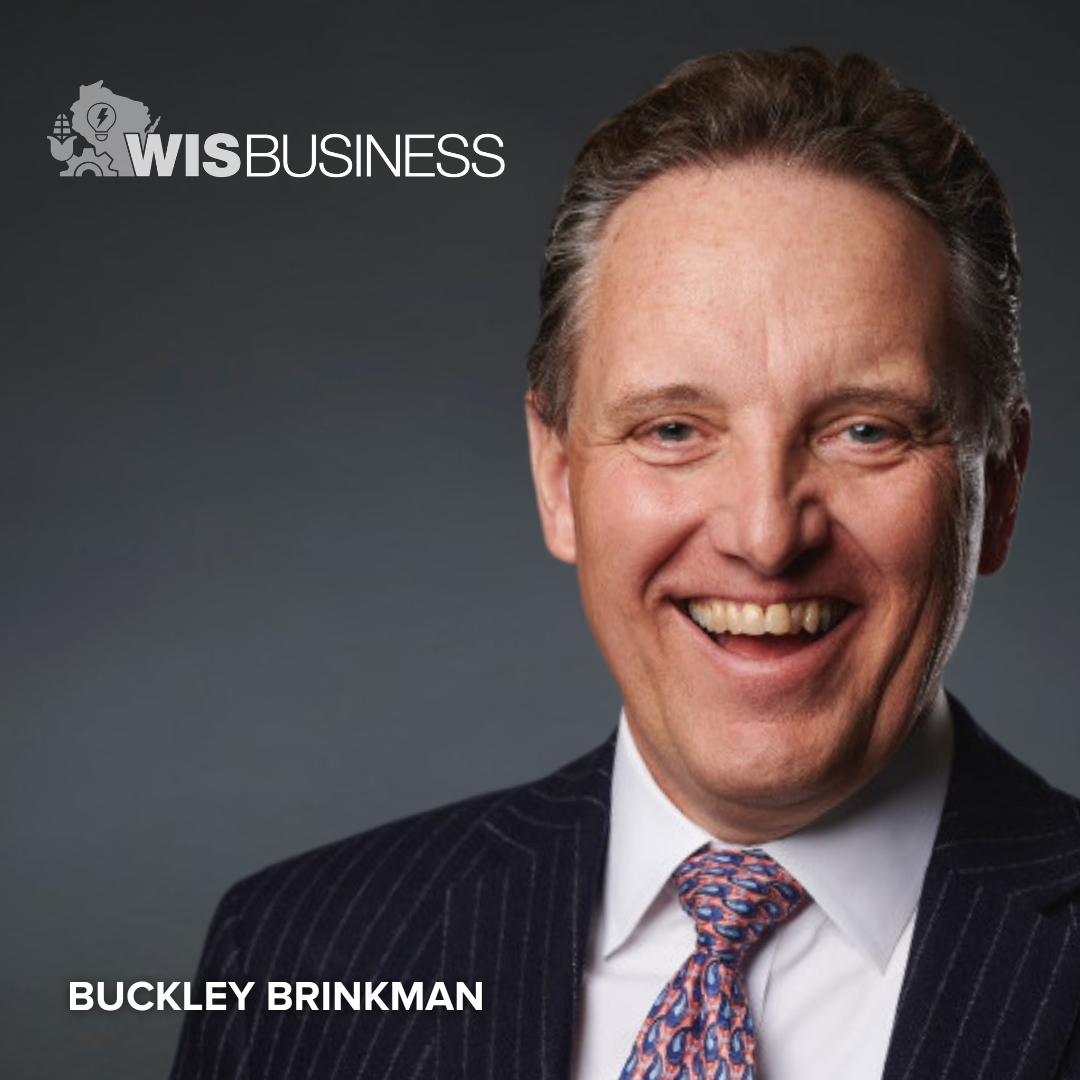
— Opinion column by manufacturing expert Buckley Brinkman
Wow. Tuesday night was stunning.
Very few people saw it coming. As the returns rolled in, many analysts were reduced to describing what was happening rather than explaining it. The results broke through the usual patterns and put all of us in new territory.
Watching race after race flip mesmerized me. Republican incumbents who won by 17 or 18 points in 2024 — Mike Turner in Ohio, Richard Hudson in North Carolina, Jeff Van Drew in New Jersey — lost their seats. Democrats picked up roughly 40 House seats nationally, and mid-decade redistricting meant to lock in safe seats backfired in several states. Here at home, Democrats flipped three state Senate seats and eight Assembly seats to win both chambers for the first time since 2008, and David Crowley won the governor’s race by about 9 points. Two years ago, Donald Trump carried Wisconsin by roughly 29,000 votes.
How do that many seats change hands in a gerrymandered, self-sorted system?
My answer: the middle moved. This isn’t really a story about one party. The same swing voters who handed Republicans the White House in 2024 delivered this result in 2026. Gallup found a record 45% of Americans called themselves independents last year — while just 27% identified as Republicans and 27% as Democrats.
Think of the two parties as glaciers. Over the past two national elections, both have been melting. Their runoff turned the small, quiet brook between them into a raging river — one strong enough to move and cause change wherever it pleases. Every election still offers two choices – but from here on, the winners will channel that river, not shuffle ice from one glacier to the other.
That’s both an opportunity and a warning. A river that rises this fast can change course just as fast. Nearly nine in ten voters told exit pollsters the cost of living was a major factor in their vote. They voted for results, not philosophy.
Now it’s time to work together on the real issues in front of us with practical solutions — not the blame and ideology that keep us locked in an unhealthy pattern. That requires working in new ways and rebuilding cooperative muscles that atrophied over decades.
Fortunately, several big issues already have broad agreement on the basics — and known solutions. Here are four worth the effort: two national, two for Wisconsin.
Immigration. Our economy needs more workers than our birth rates and current policies can supply. Wisconsin feels it acutely: a UW–Madison School for Workers study estimated that more than 10,000 undocumented workers do roughly 70% of the work on our dairy farms. The two parties have never been as far apart on core solutions as their rhetoric suggests. In 2013, a bill pairing tougher border security with a path to citizenship passed the U.S. Senate 68–32. The key questions haven’t changed: what to do about the roughly 14 million people living here without legal status, and how to keep the border secure while building a realistic legal immigration system that matches our workforce needs.
Social Security. This is a math problem: more money is going out than coming in. The 2026 Trustees Report projects the combined trust funds will run dry in 2034 — the retirement fund alone in late 2032. After that, incoming payroll taxes cover only about 83% of promised benefits. A shrinking workforce accelerates the squeeze, as fewer workers support more retirees. We know the levers to raise revenue and slow — or stabilize — spending. We’ve pulled them before: in 1983, President Reagan and Speaker Tip O’Neill backed a bipartisan commission’s plan that put the system on solid footing for half a century. Leaders can find that combination again. Every year of delay makes the fix more painful.
Affordable housing. This is a supply problem in almost every community across the state. Forward Analytics estimates Wisconsin needs roughly 200,000 more housing units by 2030. I’ve seen creative solutions in many Wisconsin communities. Nearly every success required difficult, candid conversations among local leaders. The usual market dynamics haven’t closed the gap — but neither have large inflows of public money. The bipartisan housing package signed in 2023, backed by $525 million in state loan funds, showed what happens when state tools meet community leadership. And make no mistake: housing is a workforce issue. You can’t hire people who have nowhere to live.
Economic development. Our economic development efforts tend to split into separate camps, and the results show it. Forward Analytics found Wisconsin ranked 38th among the states in real GDP growth from 2017 to 2024, and in the bottom third for population and labor force growth. We need to renew our economy by fostering a spirit of entrepreneurship while taking full advantage of our manufacturing and agriculture bases. Currently, Wisconsin has dozens of initiatives in motion — each doing important work, and most too small to make a real difference. As a result, we can’t quickly build the scale needed to grow businesses or capture the major opportunities of a changing economy. We must align these efforts around a limited number of shared goals and build the infrastructure to scale them.
Collective action starts now
The new majorities in Madison and Washington will be tempted to read Tuesday as a mandate for their agenda. It isn’t. It’s a mandate for results — and the voters who delivered it just showed how quickly they’ll move again. And remember almost half the people who voted on Tuesday, voted for the other side.
So here is my challenge.
To newly elected leaders: Pick one of these four issues and put a bipartisan bill forward in the first 100 days. Invite the other side to help write it, not just vote on it. The fastest way to keep the middle is to prove you heard it.
To business leaders: You are among the most credible voices for pragmatism in this state. Show up — at the Capitol and in your own communities — with specific asks, not general complaints. Join the housing conversation in your town. Push your trade association to align with others around a shared economic development agenda instead of defending its own corner.
To the rest of us in the middle: Stay engaged past Election Day. Call your new legislator — and one from the other party — and tell them what you want fixed. Then hold them to it.
A single flood doesn’t carve a canyon. Steady flow over time does. The middle made its point on Tuesday. Now it must keep showing up — in town halls, boardrooms and the Capitols — until the work gets done. That’s what collective action looks like.
Let’s get to work.