

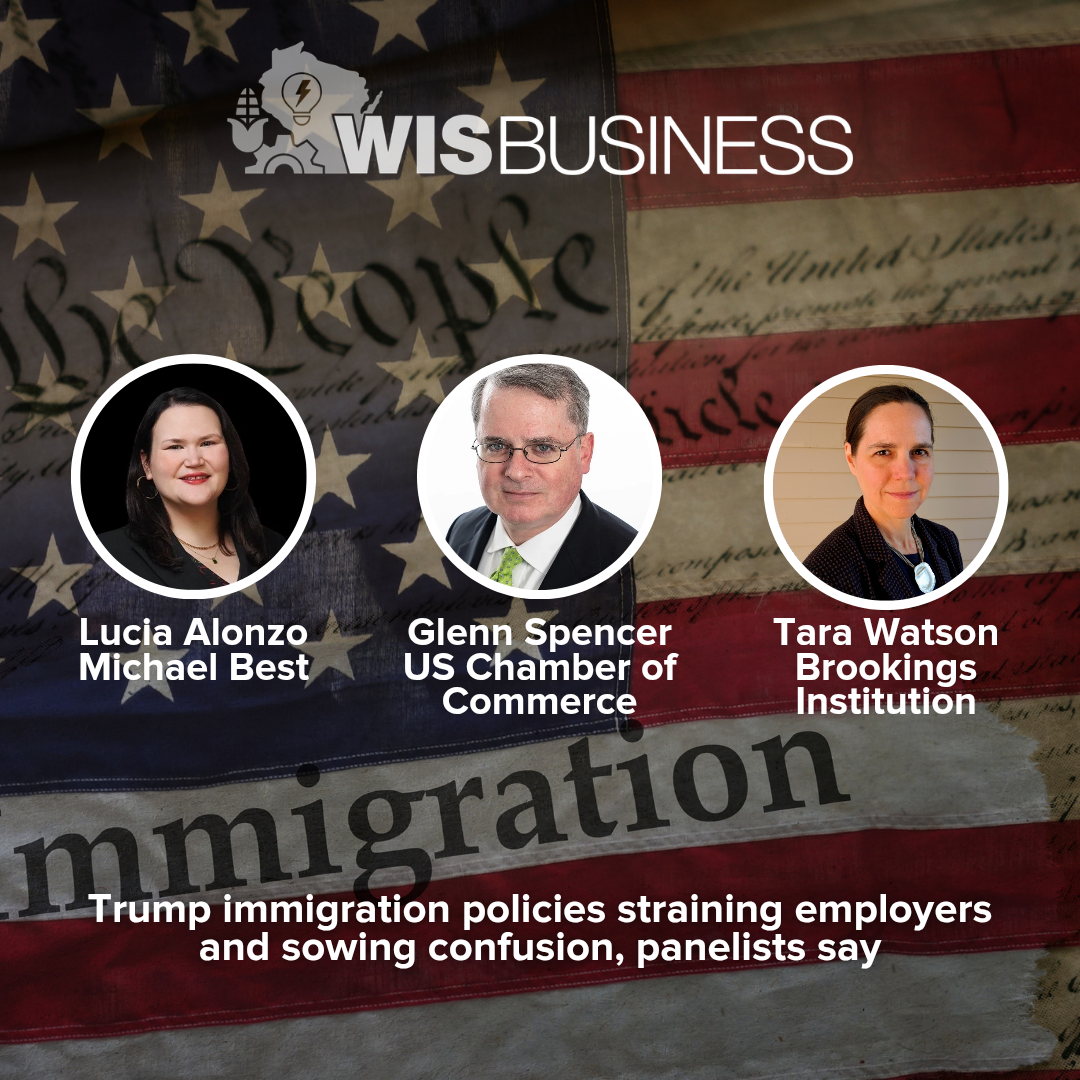
The Trump administration’s moves to restrict and slow both illegal and legal immigration are putting a strain on employers and sowing confusion, panelists at a WisPolitics event agreed.
Speaking during yesterday’s WisPolitics-State Affairs D.C. breakfast panel discussion, Glenn Spencer of the U.S. Chamber of Commerce said there’s been a lack of clarity from the administration on a number of immigration issues including the H-1B work visa program.
Spencer, the senior vice president for the chamber’s employment policy division, pointed to the administration’s move to enact a $100,000 fee for these visas as a way to discourage immigration. While the fee was later struck down by a federal judge, initial messaging from the White House led to widespread uncertainty about who would be affected by the new policy and multiple lawsuits.
“We’re all just sort of wondering what this actually means, so it’s unfortunately been unclear,” he said.
He noted many immigrants coming to the United States run their own businesses and stimulate the economy, pointing to estimates that each H-1B skilled worker visa creates about five jobs domestically.
“When you turn that off, you turn off that number of jobs too,” he said.
Tara Watson, an author and director of the Brookings Institution’s Center for Economic Security and Opportunity, noted the “dramatic slowdown” of migration to the U.S. under the Trump administration as well as more strict immigration enforcement.
“When big immigration enforcement surges happen in particular places, you see a decline in employment,” she said. “That isn’t always coming in the sectors you expect. You see it in things like construction and so on, but you also see it in more discretionary kinds of spending, and that speaks to the fact that immigrants are both consumers and producers.”
Meanwhile, Michael Best Strategies Principal Lucia Alonzo referenced the impacts on tourism, noting Las Vegas is experiencing a “mini-recession” as visitor numbers have fallen in the current climate. Spencer echoed this concern, noting the administration is “slow-walking” the process of vetting travel visas and putting a bottleneck on this sector.
Alonzo said hospitals also face a challenge with staffing amid the immigration crackdown, adding “the quality of life locally will just decline,” particularly in rural areas.
Despite the challenges associated with the Trump administration’s approach to immigration policy, Spencer argued the president “deserves some credit” for fortifying the southern border against illegal immigration. He noted Trump won in both 2016 and 2024 due in large part to his immigration platform.
He also said the federal response to the “surge” of illegal immigration in recent years has led to more attention being focused on illegal child labor occurring domestically, in both southern states and elsewhere. Spencer said that’s “at least one positive thing that we have seen come out of this,” as enforcement has largely shut down instances of child labor law violations.
Watson noted the U.S. economy has doubled in size since the country last had major immigration reform make it through Congress, meaning the legal limits for the number of immigrants allowed in haven’t changed much in decades. She argued “it’s definitely time for reform” on this issue.
But Spencer said “we don’t see anything coming out of the White House to suggest” a new federal immigration policy may be coming anytime soon.