
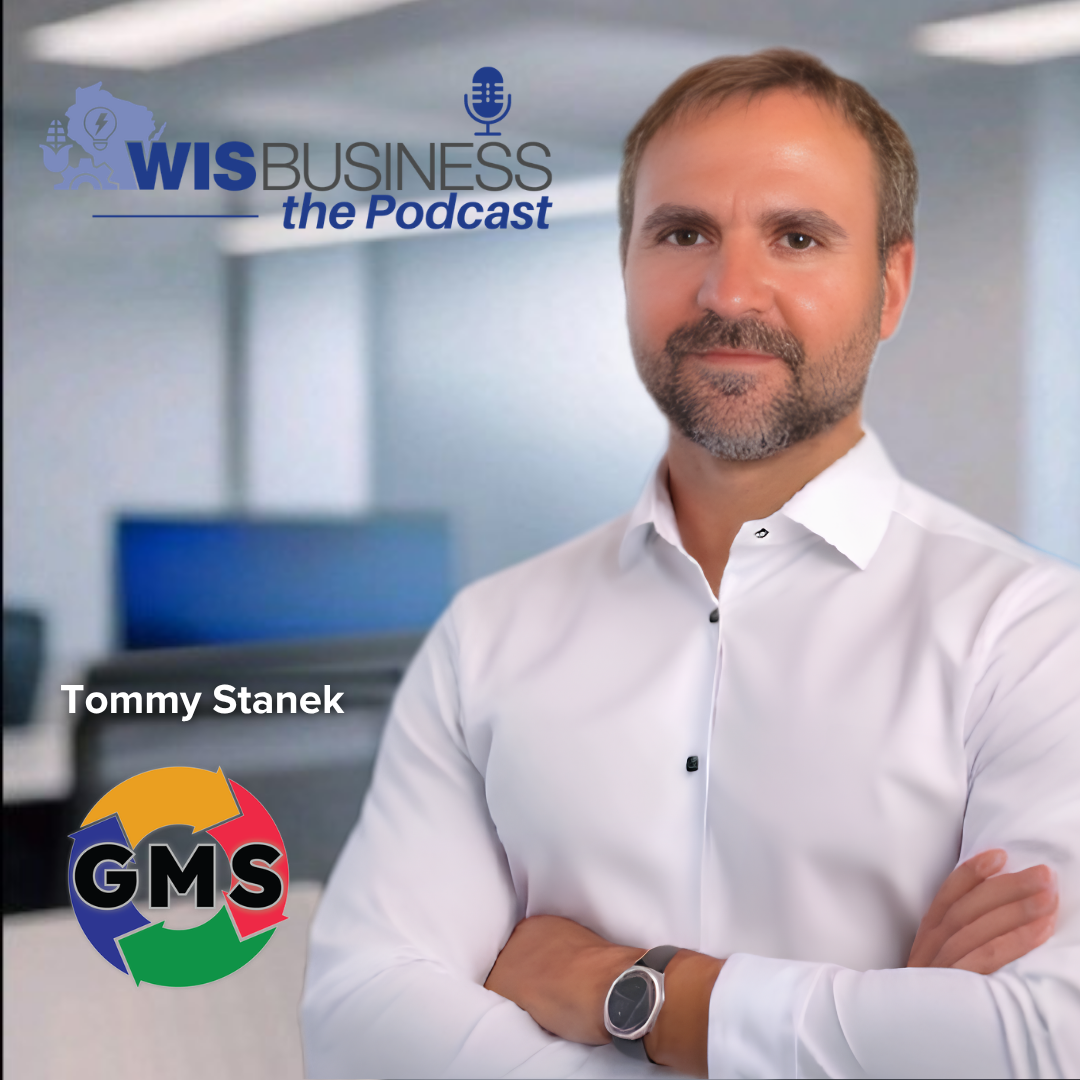
This week’s episode of “WisBusiness: the Podcast” is with Tommy Stanek, co-founder and CEO of Graceful Management Systems.
The Madison-based company has an enterprise resource planning system for the construction industry that also wraps in applications for estimating, scheduling, accounting, human resources and other business functions.
After launching in 2021, company leaders began with market research and built the platform over about a year, then developed their business plan and began pitching to investors. The company got initial funding in late 2022 and started full-scale platform development soon after.
Stanek discusses ongoing beta testing for the platform as well as how GMS is using AI to improve its functions.
“It builds machine-learned estimates for our subscribers, so it’s actually using historical data to build out more accurate estimates for their customers,” he said. “Additionally, when the customers sign the contract and begin work with that contractor, the GMS autonomously manages … schedules of all the projects that they’re actively producing, regardless of what state it’s in.”
The company’s been in the “beta phase” for about 18 months and plans to start selling subscriptions by the end of the quarter.
The conversation also explores potential pitfalls of AI as well as emerging opportunities with the technology. The GMS software team built its own code, and Stanek says that sets it apart from the “traditional models” that are more widely used.
“We need to continue to feed it new information, and that’s ultimately what Graceful Management Systems does,” he said. “It captures real-time data, it’s identified the gaps that these artificial intelligent models are lacking. It’s also bringing a standardization and consistency across the network … less assumptions, more consistency, better outputs.”
Looking ahead, Stanek said he’s focused on growing a client base of single-trade contractors to develop the GMS data platform before eventually entering the general contracting market.
“General contractors are producing 10-30% of the actual work, which means that 70-90% of these buildings that we’re all utilizing were in fact built by the subcontractors that they hired,” he said. “Therein lies the data that is our focus.”
Listen to the podcast below, sponsored by UW-Madison: