

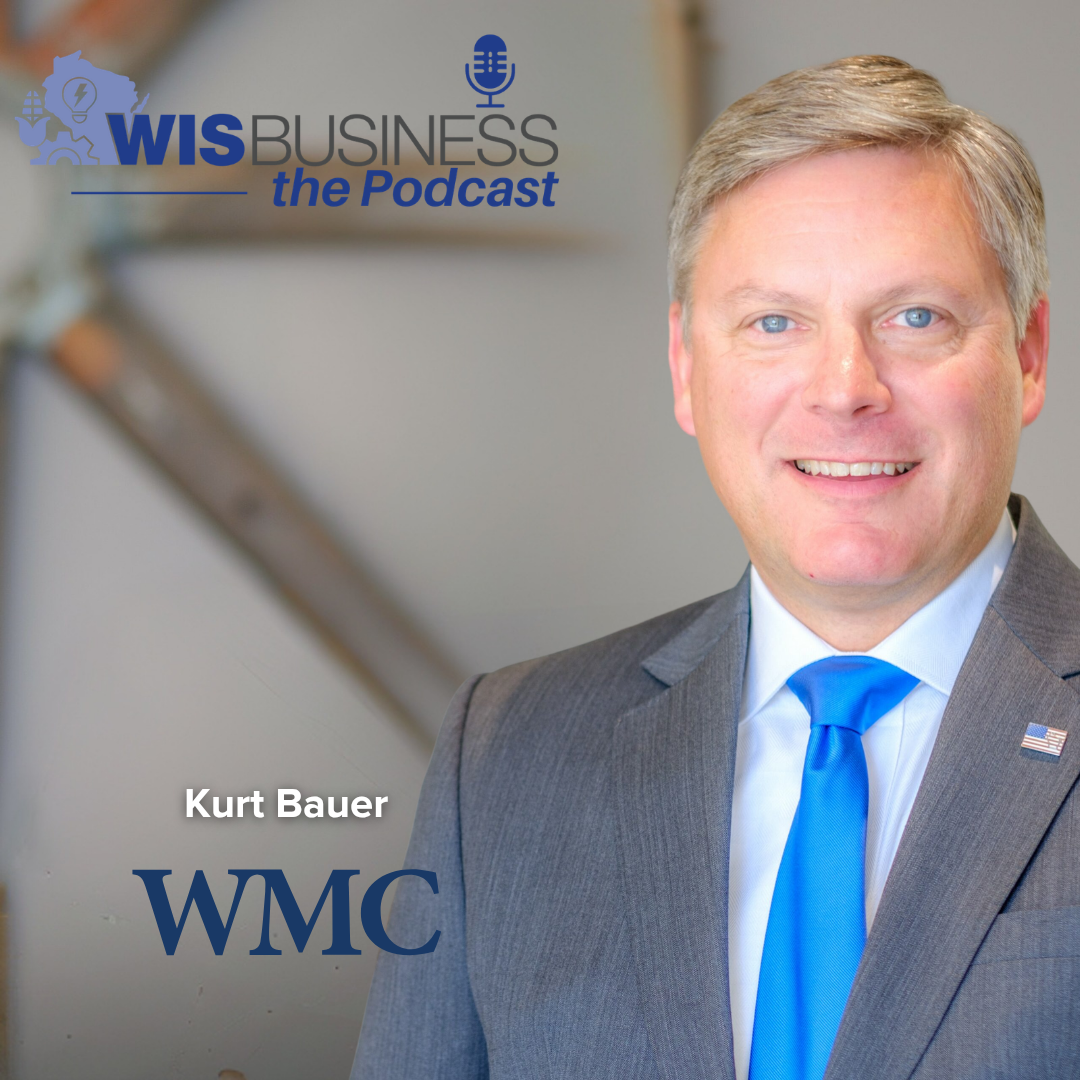
This week’s episode of “WisBusiness: the Podcast” is with Kurt Bauer, president and CEO of Wisconsin Manufacturers & Commerce.
The discussion centers on the Wisconsin Competitiveness Report, released earlier this month by the WMC Foundation. It argues the state is “falling behind,” and lays out a number of policy priorities for the state’s largest business group.
The document is described as a blueprint for the next governor, and Bauer highlights some of the political qualms captured in the report.
“I like to say, Wisconsinites are competitive,” he said. “We expect to be good in our sports teams, we want to have a strong economy. We don’t want mediocrity, and I fear that’s where we are right now.”
The report says Wisconsin has a “taxing problem” that needs to be fixed, arguing the state is plagued with “stagnant” tax rates that penalize employers.
It shows the state’s corporate tax rate is the 12th highest in the country at 7.9%, though most companies fall under the individual income tax rate, which is the ninth highest in the country. Most of those companies fall under the highest individual tax bracket of 7.65%.
But other measures paint a more favorable picture, with a recent Wisconsin Policy Forum report showing the state’s tax burden “remains at a record low” at 9.6% of personal incomes. At the same time, the WPF’s last state-by-state tax rankings put the state at 35th in the country in 2022, a substantial drop from when Wisconsin was the third highest in 2000.
When asked about the disparity between these two views of the state tax environment, Bauer emphasized the state’s tax burden, calling it “very high.”
“We traditionally have been a high-tax state, we remain a high-tax state,” Bauer said, adding “the reality is that if you tax something, you get less of it. Do we really want less manufacturing?”
He also pointed to broader affordability challenges in Wisconsin.
“One of the things that we’re lamenting is the fact that young people can’t buy houses because they can’t afford it,” he said, noting the average age for a first-time home buyer has jumped to 38 in 2024 from 26 in 1991.
Bauer weighs in on other elements of the report, ranging from impacts of the state’s manufacturing and agriculture production tax credit, hospital price transparency, his message to prospective candidates for governor and other key priorities for the state’s business lobby.
“We should reject tax increases … The governor tried to increase the personal income highest bracket to 9.8%, pretty close to where Minnesota is at 10%. That’s the wrong approach, we should definitely reject that,” he said.
Listen to the podcast below, sponsored by UW-Madison: