
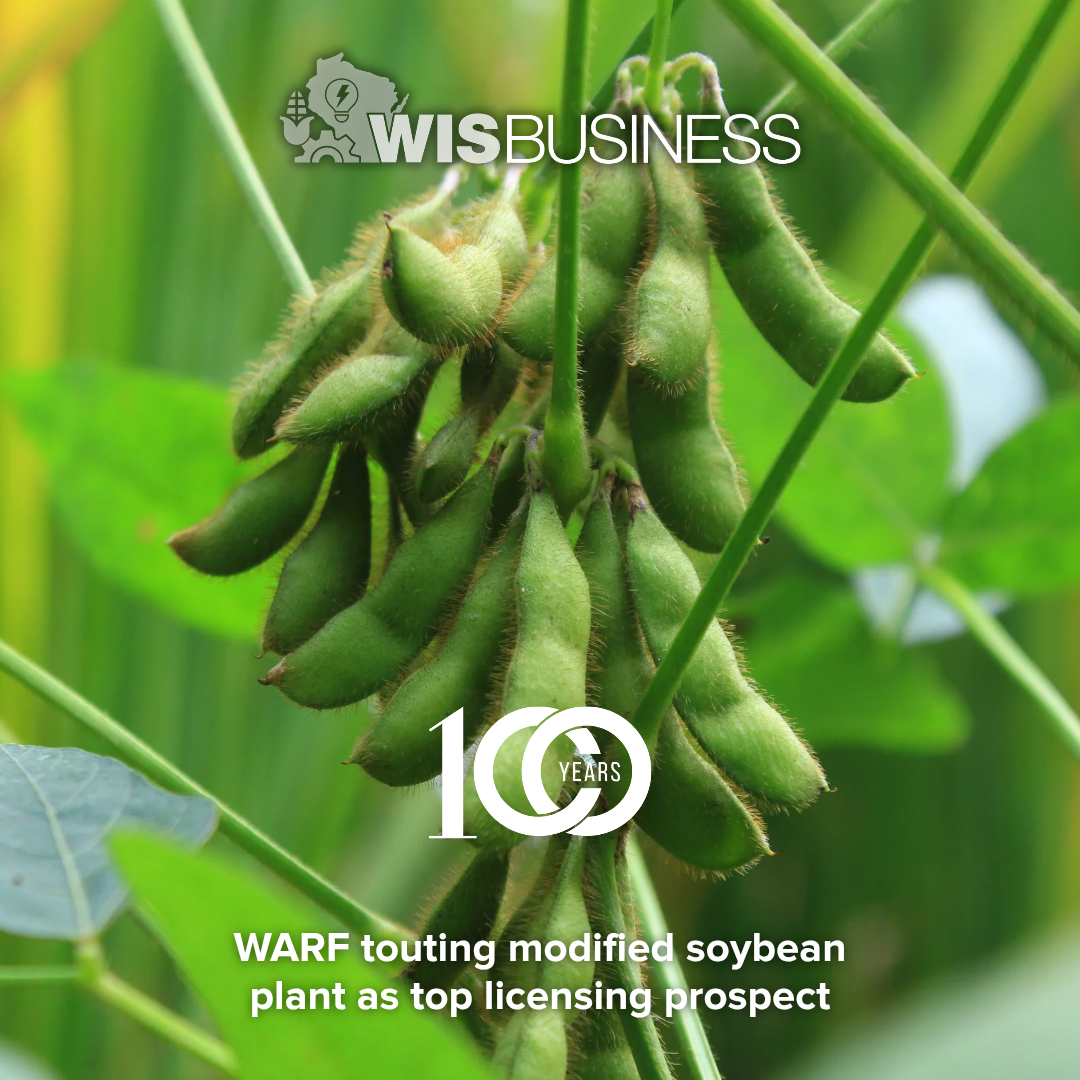
WARF is spotlighting an altered form of soybean plant as a top licensing prospect, with potential applications in food dye production as an alternative to more harmful synthetic chemicals.
The soybean plant was engineered to produce large amounts of a natural red pigment called betalain in hopes of replacing synthetic dyes like Red Dye No. 3, which have come under fire by the FDA due to possible health concerns.
It was created by a group of scientists including UW-Madison Prof. Hiroshi Maeda, graduate student Soyoung Jung and Ray Collier, a department manager within the university’s Wisconsin Crop Innovation Center.
While natural alternatives already exist, such as beet juice extract, Maeda says it can be as much as 10 times more expensive than the synthetic options.
“Our lab has been interested in plant chemical pathways or plant metabolism, when we heard about the issues or the challenges of producing natural color in an affordable and scalable manner, we thought we could appy our expertise to help address this societal problem,” he said in remarks provided by WARF.
To create the modified plant, the scientists introduced a betalain-producing chemical pathway into the soybeans, while also giving the plants more of the “building blocks” needed to create the pigment. They explored other options but found the soybean plants worked best due to being more tolerant to the induced change.
Collier says “we haven’t hit the limit” for increasing this pigment production within soybean plants.
“The potential to really ramp this up in [soybeans], it’s real … that’s why Jung’s work is so important, because to make that a sustainable increase that doesn’t, you know, negatively impact the health of the plant or the ability of the seeds to germinate, those are critically important for producing a commercial product,” he said.
In addition to the potential use in making better food dyes, the altered soybean plants also include other chemicals with potential applications in pharmaceuticals, Jung said. They produce a compound called L-DOPA that’s used in brain health supplements, an overview from WARF notes.
“In our soybean, because we are producing these chemicals in all of those leaves and seeds and all of those tissues, so they’re pretty abundant everywhere in our soybeans,” she said, adding the team aims to work with industry partners on pilot-scale experiments geared toward commercialization.
The research team is one of two 2025 WARF Innovation Award winners, the group announced, having been selected by an independent panel of judges from a field of six finalists. Each awarded team gets a $10,000 prize.
See more here.