

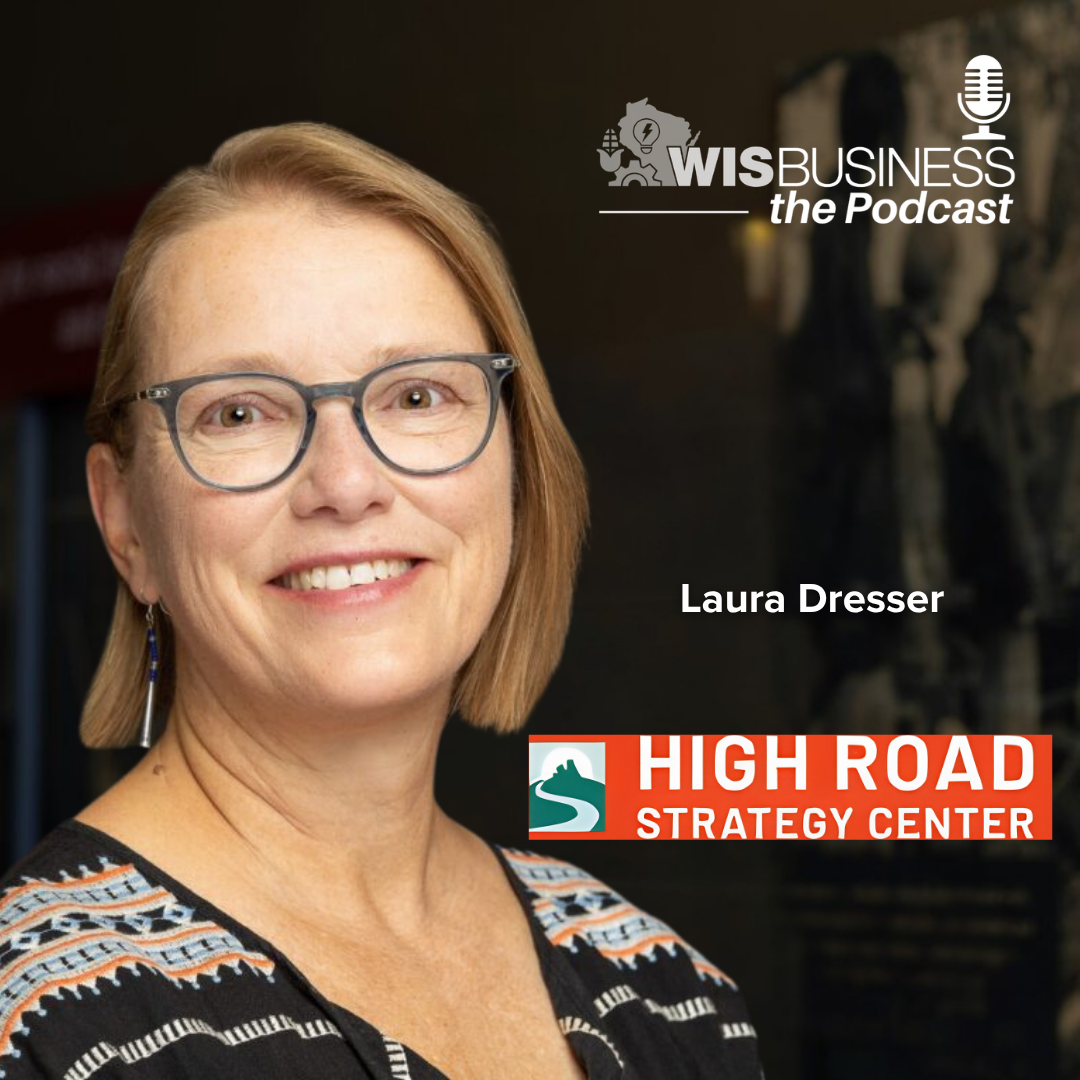
This week’s episode of “WisBusiness: the Podcast” is with returning guest Laura Dresser, associate director of the High Road Strategy Center at UW-Madison.
The conversation is focused on the center’s latest report, “Can’t Survive on $7.25,” which makes the case that Wisconsin’s minimum wage is too low to live on and explores the potential impacts of raising it.
“We’re just getting left further and further behind, and I think it matters especially for workers in the most vulnerable positions,” Dresser said, adding “on every one of Wisconsin’s borders there is a labor standard that exceeds Wisconsin’s labor standards.”
She discusses how higher minimum wage levels elsewhere in the Midwest play a role in the state’s efforts to attract workers.
“I’m sure people on the border have to compete with those wages, because across the border, wages are just remarkably higher,” she said, pointing to Illinois’ minimum wage of $15 an hour, Michigan’s rate of nearly $14 and Minnesota’s rate of about $12.
The report details how raising Wisconsin’s minimum wage to $20 by 2030 would impact workers, noting the move would boost wages for more than a fourth of workers in the state.
Dresser acknowledged that may seem “very aggressive” given the regional landscape, but noted it’s based in part on an analysis from the Economic Policy Institute in Washington, D.C.
“They’re starting to look to two-thirds of the median wage as a good way to think about what’s possible for a minimum wage,” she said, adding “there has been so much work raising the minimum wage all across this nation since 2012.”
Since that time, when the “Fight for $15” movement got its start in New York, extensive research has been conducted on the impacts of wage increases across the country, according to Dresser.
“That two-thirds of the median, you don’t get into big disemployment effects, you maintain pretty strong growth in low-wage sectors and you deliver a lot of money to low-wage workers that makes a real difference in terms of their ability to deal with the cost of living,” she said.
Listen to the podcast below, sponsored by UW-Madison: