

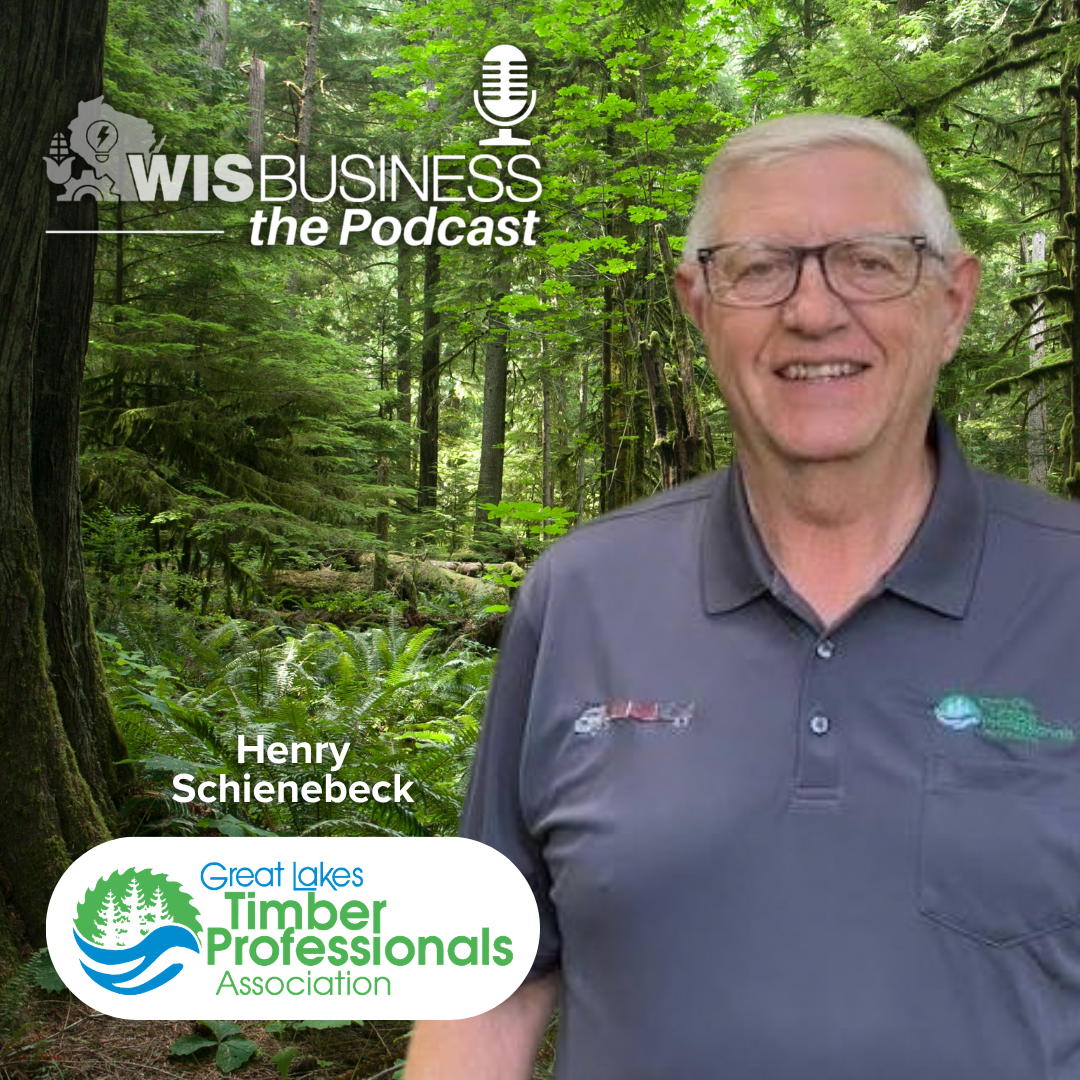
This week’s podcast is with Henry Schienebeck, executive director of the Great Lakes Timber Professionals Association.
The conversation explores the impacts of escalating trade tensions with Canada including new tariffs and how they’re affecting the forestry sector in Wisconsin and elsewhere in the Midwest.
“We’re growing a lot of softwood lumber but we don’t really have a good infrastructure to produce that into lumber, so we’ve had more Canadian lumber coming in,” Schienebeck said. “Actually I think the numbers I’ve heard are around 33% … with the fires and stuff we’ve seen, there’s more of an emphasis being put on rebuilding that infrastructure.”
That’s in addition to efforts to help sawmills “have a more guaranteed supply of raw material” so the industry can use more domestic wood, while seeking to improve forest health.
“To where our forests aren’t overcrowded, and they’re more productive and healthier,” he said.
He also discusses how business leaders in this space are adjusting their approach and seeking new markets to engage with, noting he’s seeing more trade missions to Mexico, Germany and elsewhere.
“We were very dependent on the Chinese market for quite a while, and of course there’s tensions there between China and the U.S. as well,” he said.
Meanwhile, he noted there’s been a “move back toward real hardwood” for cabinet makers.
“So I think that’s a bit of a shift that we’re seeing, and I think people are also starting to understand a little bit better that when you’re using real hardwood, you’re really playing a part in sustainability because those hardwoods store carbon,” he said. “And, you know, carbon sequestration is a major topic right now.”
Schienebeck stressed the importance of preserving and developing domestic forestry resources, noting Wisconsin remains the top papermaking state in the country.
“It’s such a big part of our daily life … I can’t think of another natural resource, really, that has the social, ecological and economic impact that our trees have on our lives daily,” he said.
Listen to the podcast below, sponsored by UW-Madison: