

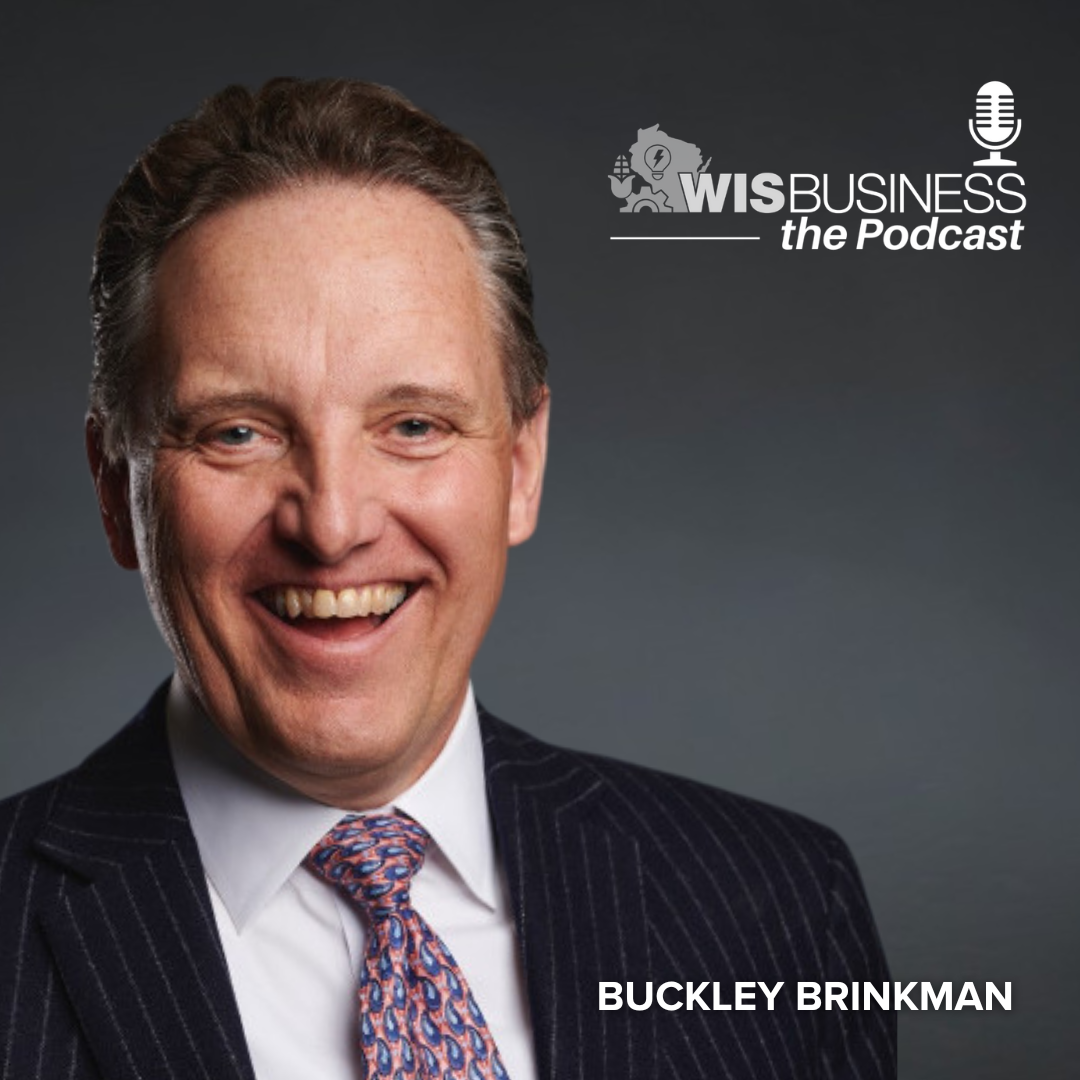
This week’s episode of “WisBusiness: the Podcast” is with Buckley Brinkman, advisor to the Wisconsin Center for Manufacturing and Productivity.
Brinkman discusses some of the work being done to advance the state’s manufacturing industry, as well as the path ahead for the WCMP. The center is part of the national network for the Manufacturing Extension Partnership, and has played a role in helping small and medium manufacturers stay competitive.
This work is done through the Manufacturing Outreach Center at UW-Stout and the Wisconsin MEP, located in the state’s southeastern region. These projects are evaluated based on the impact for manufacturing companies, ranging from company growth to capital investments and job creation or retention.
“It’s fun to be part of that, because those metrics align us perfectly with our clients, so by those metrics, the MEP in Wisconsin has had more than $8.9 billion worth of impact for manufacturers throughout the state,” Brinkman said.
Some of these efforts have focused on improving fundamental operations to be more profitable, while others have involved applying advanced technologies such as automation and AI.
“Around AI, we really help manufacturers understand what it is, where they can get started, and how they can pick projects that will actually generate an ROI for them,” he said. “So we’re really helping manufacturers in practical ways to stay competitive, and really improve and grow.”
Brinkman recently announced on LinkedIn that he’s wrapping up his time with the MEP network, and he explains the context for that decision.
“As anybody who’s touched federal funds in the last year knows, 2025 was a very difficult year, we went through eight months of really making sure that the MEP would survive,” he said. “And in the budget bills that are going through, we have funding, we have very good language to keep the MEP system alive.”
The WCMP was created about a decade ago as a “buffer” between the MOC and WMEP, to facilitate better collaboration between the organizations. Brinkman says that role is no longer needed, so winding down the WCMP will help reduce bureaucracy while providing more funding for the other two groups.
“It’s a much more efficient operation, I think it will be much more effective for manufacturers across Wisconsin,” he said.
Listen to the podcast below, sponsored by UW-Madison: