
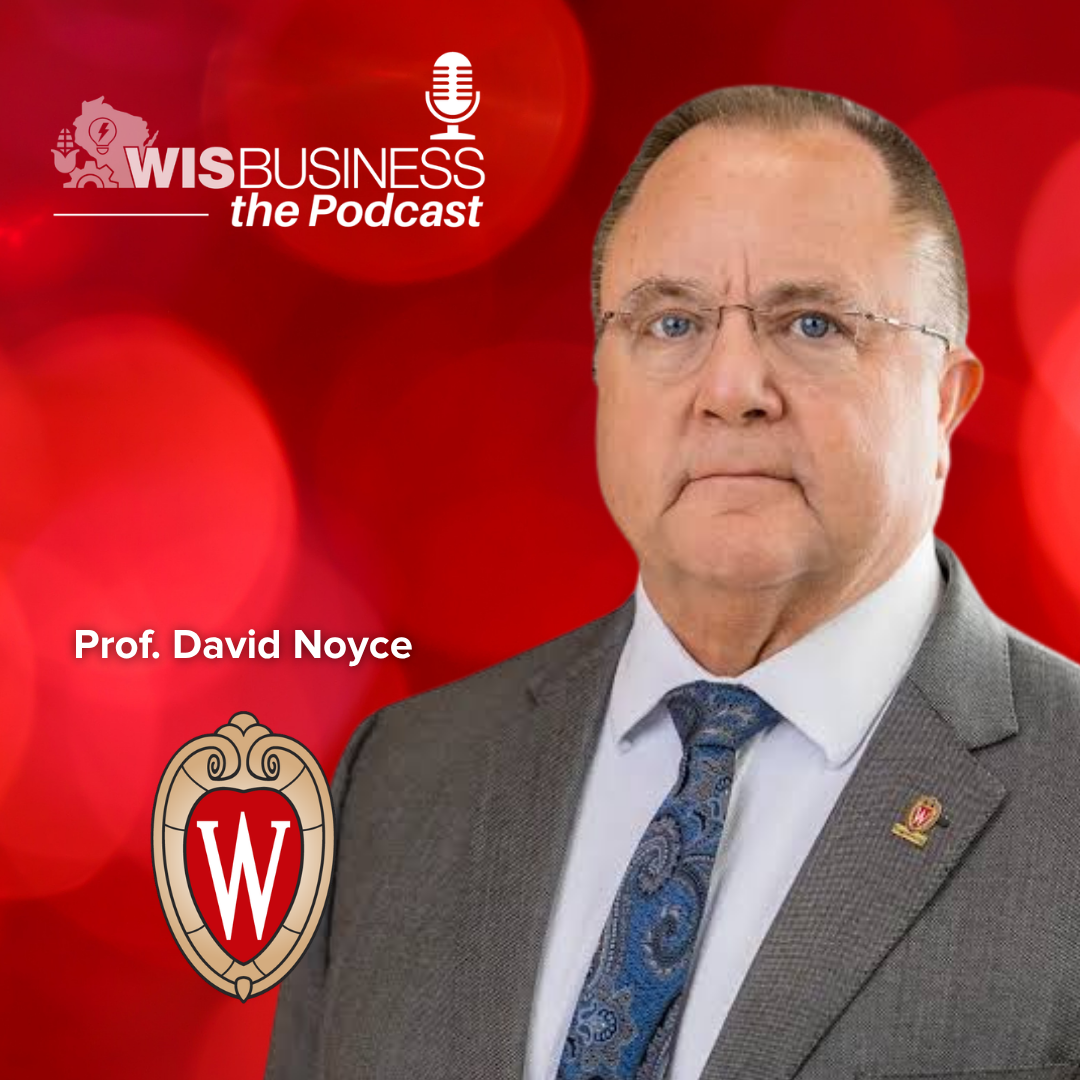
This week’s episode of “WisBusiness: the Podcast” is with Prof. David Noyce, director of the Traffic Operations and Safety Laboratory at UW-Madison.
Noyce, the executive associate dean and Arthur F. Hawnn professor of transportation engineering at the university’s College of Engineering, discusses the work being done around self-driving vehicles and other advanced technologies at UW-Madison.
The TOPS lab has existed since 2003, first launched as a partnership with the state Department of Transportation aimed at addressing traffic operations and safety challenges in Wisconsin and elsewhere. The scope of the effort has since expanded to include evolving technologies playing a role in this space, including testing autonomous vehicles on test tracks in the state.
These projects have sought to assess “how vehicles would react … primarily we’re looking how if a pedestrian walked in front of a vehicle, if a bicycle was in front of a vehicle, what would the vehicle do to avoid those type of collisions,” Noyce said.
Parallel to the university research, private companies such as Waymo have been testing their own self-driving vehicles, accelerating efforts in this space.
Noyce draws a distinction between automated vehicles and those that are truly autonomous, which can do all the work to bring a user to their destination, start to end.
“We’re not quite there yet, the Teslas and others will get you pretty close to that once you get moving” but aren’t yet considered fully autonomous given the need for driver input. “We are doing a number of different things to kind of bridge from where we are today to that full autonomous operation.”
Researchers are seeking to understand how evolving AI capabilities will influence the development of self-driving vehicles.
“AI is definitely going to impact how the transportation system and how these autonomous vehicles operate in the future, how they connect with each other, how they become smarter and maybe truly become autonomous, perhaps in a little bit more rapid way,” Noyce said.
A big part of this challenge is addressing public trust concerns with the technology, Noyce said, noting the TOPS lab has been conducting simple test sites to expose members of the public to how it works.
“Once we get people to begin to trust the technology, where can we use it in order to provide a meaningful first step into embedding autonomous vehicles into … the transportation system across the state,” he said.