
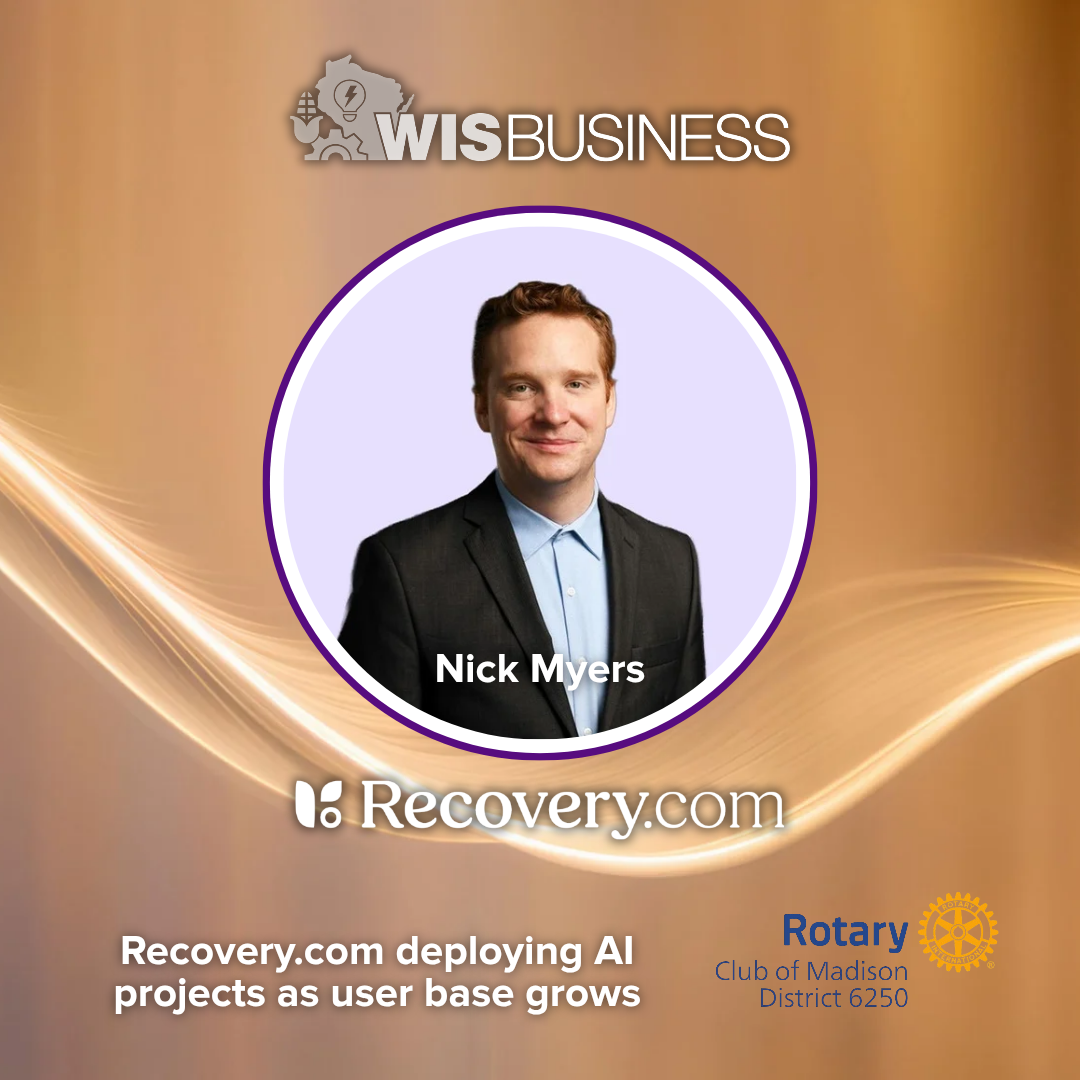
Madison-based Recovery.com is deploying AI to more quickly connect its growing user base with treatment resources and conduct research on service providers.
Nick Myers, an entrepreneur and the director of AI innovation for the company, discussed various applications for the technology during yesterday’s meeting of the Madison Rotary Club. Since Recovery.com acquired Myers’ former startup RedFox AI last year, the platform has grown to about 1.5 million visitors per month.
“We are the best place on the internet to find treatment,” Myers said.
The site now has 25,000 treatment centers listed from all over the world. That includes facilities offering treatment for eating disorders and depression as well as rehab for those with drug addiction.
“It also shows the scale of when we deploy AI within our organization, the broad impact that is having on people coming to find treatment, and that’s really powerful,” Myers said, adding “we need to be accurate, and we need to be comprehensive in the sense that we need to cover every type of treatment … and AI is helping us do that.”
The business last fall launched its Recovery AI tool. It’s meant to help users interact with its lengthy treatment center profiles, which include a wide array of information, and parse out the information they need. The tool can answer questions about what insurance plans the center accepts, what services they offer and more.
“It’s a way they can get answers very, very quickly to a question they might have that allows them then to get in touch with that center … it’s been super valuable to see the questions people are asking,” Myers said. “And we can see people actually reaching out from this tool to the treatment center at a much quicker pace.”
He attributes the tool’s success to its “narrow” design, noting the system only has access to the vetted data that’s located on the center profiles, unlike more general systems like ChatGPT. He argued AI applications like this can help create trust with users, noting the sector’s challenges with this.
“Especially in behavioral health, which historically has been a field that’s had its ups and downs with people trusting it, we have to ensure there is trust with this tool, and for us at least it’s proving quite successful,” Myers said.
Meanwhile, Recovery.com has also launched a project called “Limitless” that aims to vastly reduce the time needed to research treatment centers and vet them for listing on the site. That work is currently done manually, and though Myers said humans will always remain in the loop, applying AI to this challenge will help accelerate the company’s plans.
Once operational, the team expects to have “most treatment centers” listed on the site within the next two years, he said.
Yesterday’s discussion referenced the latest McKinsey report that found 88% of enterprises are using AI, but only 6% are getting “real enterprise value,” Myers said.
“That is a very low number … so clearly there is a gap there that we need to try and solve,” he said.